



 Loading...
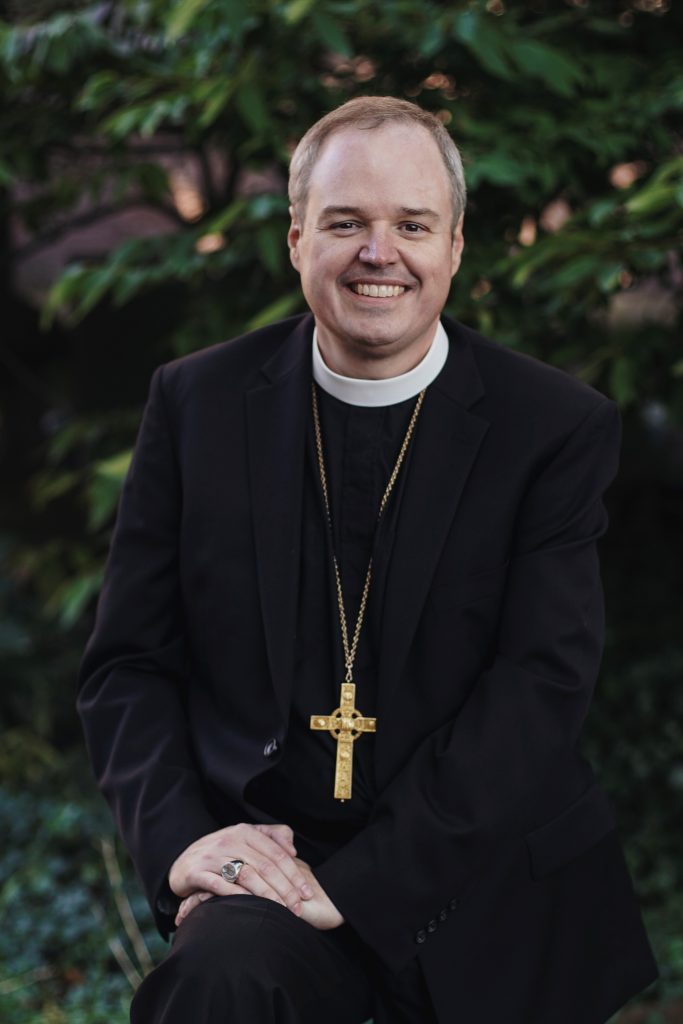
At the recent Trustees & Council meeting, Canon to the Ordinary, Joan Smith, announced her own retirement, effective October 1st. Her last day in the office will be August 31st. After serving as Canon to the Ordinary since December of 2007, she had many stories to share about her history in the diocese, her plans for the future, and the future of her position. Below are a few excerpts from the interview I had a pleasure to have with her hours after hour announcement.
Brian Kinnaman: When you began your work as Canon to the Ordinary, what was the biggest challenge you faced?
Joan Smith: Hmm… I guess the biggest challenge I faced was going back into a subordinate position after several years in charge of congregations.
BK: And that was under Bishop Gulick, correct?
JS: Yes
BK: How did you overcome that?
JS: I had experience before as an assistant priest. I just called on that.
BK: Throughout the entirety of your position as Canon to the Ordinary, what was your greatest achievement?
JS: I don't have to look very far back. I think the culmination of the All Saints Task Force business plan project has been the longest term project in terms of continuity, and I bet it's the most significant diocesan wide.
At that night's T&C meeting, the Task Force presented their proposal for renewing and revitalizing the ministry of All Saints with a combined approach that included the addition of a Director of Marketing and Business Development, creating a dedicated alumni association, and by raising additional financial support through an annual fund and All Saints Sunday.
BK: The execution of that project is going to positively impact the future of Christian formation within the Diocese, youth programing, the physical center itself, and all those who have ever experienced the mission and ministry of All Saints. It really is a wide ranging piece of work. Congratulations on that accomplishment.
JS: Thank you.
BK: Throughout your tenure as Canon, you've also impacted the lives and ministries of many different congregations. Are there any specific stories that come to mind in your ministry to those congregations?
JS: The one that comes to mind most vividly is the time that Mary Jane Cherry and I went to western Kentucky during the floods to be with the people in Hickman. We had a number of things we were doing during that one day trip. We celebrated the Eucharist with that very small congregation who had members whose houses were in danger of falling down the bank because of the flooding and undercutting. The town was inundated in the lower levels. Really a town in stress and crisis, and still that congregation reached out to the Coast Guard and were aware that those were very young people a long way from home doing a very dangerous job during a natural disaster. That was very dramatic. Part of it was also the satisfaction of being able to liaise with the city and county leadership on behalf of the Episcopal Relief and Development grant that provided money for meals for people who were doing flood relief work. That was very intense and very memorable. I think it was important that someone from the Diocesan Office was there with the people of Hickman. They were doing good ministry, and it was critically important that they know there weren't doing that alone.
BK: Looking toward the future of your position, what are you setting in place for the new Canon, and what is the future of that office going to be?
JS: One of the delights that the new Canon will have is a staff that includes you, and I have to admit a certain sense of satisfaction about the hiring that Bishop White and I have done during his Episcopate. You and Kendall are such wonderful hires that it sets up the new Canon to walk into a staff that includes a very, very experienced person, Becky Meyer, and new people with different ideas from the past. It's going to go forward in a fascinating way. Another thing that's set in place is we've got All Saints off the dime and off the negative perception in the Diocese and moving toward being the asset it really could be.
BK: If there's one project or task you want to see the Diocese accomplish after you leave, what would it be?
JS: I think that our tendency to be fragmented saps a lot of energy and we lose a lot of opportunities by being separate congregations. There's so much potential from cooperation. I've been committed to try and get us to work together better and in contiguous groups principally. I think there's so much power there. When we try to do things separately, it just siphons off so much of that power and effectiveness. I would like to see us reverse the trend to isolationism and really become more aware of the holiness and beauty that comes when we act together.
BK: Any other committees you serve on or special interests you have on which you'd want to touch?
JS: One of the unexpected perks of the job of Canon to the Ordinary is that it holds two positions as the Bishop's Representative. Right after I arrived, Bishop Gulick said to me, "I want to take you to lunch at Home of the Innocents and let you meet some people." On the way in the door he also added "Oh by the way, you're going to be my representative on the board." That's one of the most incredible boards I've ever been on. They're a group of very talented people from all areas of community life. They really show up, give their best, and work together. The staff is excellent. It's a fascinating and exiting ministry. Anyone who gets this job and gets to represent the bishop on that board is in for a really wonderful experience. I've learned so much and gained so much skill from just being around that environment.
The other piece of that is being the Interfaith Center Coordinating Committee. I think we don't realize how unusual it is to be involved in this ministry in an interfaith setting that's cooperative. A lot of churches try to do it on a parish connected basis, but very few in this country do not only ecumenical but interfaith ministry. The Jewish community, and the strength that that group has in the relationships that they've built over the years, has been eye opening and a real privilege.
BK: Would the new Canon automatically serve on those two boards?
JS: I don't know. One may go the new Canon to the Ordinary and one to the Canon to Congregational Vitality. It's the Bishop's call.
JS: This is a position that has some wonderful colleagues beyond the Diocese. The people who do diocesan ministry are such a dedicated group of people. Some of them have been at it for decades. Which just amazes me! Some really sharp people who come from all kinds of backgrounds and some who are and are not Episcopalians. It becomes a very rich, diverse group, but everybody cares about the Church and is doing a good job. When we don't know how to do something, we pull on our network throughout the wider church.
BK: I think that work mentality mirrors your desire for parishes within our own diocese to work closer together to achieving their goals.
JS: As you say that, I go back to something Ann Belford Ulanov pointed out that really changed how I feel about the world. She said, in a nutshell, that the Holy Spirit connects and that which is opposed to God snips the connections. Sometimes the connections seem so insignificant and so inadequate to address the needs of the world, and we can get tricked into thinking they're nothing, but they really are everything.
BK: It's all about community.
JS: Two things really resonated with me in the Canon to the Ordinary's job. One is that when I go to the ballet, I like to sit in the balcony, so I can see the patterns in the choreography. Sitting in the Canon's seat, you get to see how churches move together and apart, how God weaves, and how things come together and make shapes in a really wonderful and dynamic way. The Bishop and I share this. Bishop White likes referring to football games from a field position where he can see the whole play develop. I have cherished the chance to have the Canon's vantage point to watch the Spirit gather communities and choreograph mission under Bishop White's leadership.
The other is when I read or go to the movies, I'm really fascinated by how God creates communities. That's a theme through literature, how God takes a group of separate people and weaves them into a group that cares about each other. They didn't lose their individuality but became so much more than they were.
BK: What is your work going to look like between now and August 31st?
JS: There's a list of things that I would love to do that just isn't going to happen with one exception of walking the Cathedral Interim Search Committee through the rest of that process. Everything else is pretty much wrapped up. I'm only going to be in the office for one day a week, Tuesdays, during July and August.
BK: So what are your plans for your retirement?
JS: I know more about where I'm going to do it than what I'm going to do. I'll be moving back to the Lexington area where I came from in September. I don't have specific content besides going swimming every day.
BK: Working on your tan? *chuckles*
JS: Yeah, right. *laughter* Working on my freckles. *laughter* People ask, "What are you going to do during retirement?" I have to say I don't know, but then I realize during 31 years of ordained life it hasn't all gone the way I would have expected it or planned. I figure I might as well see what unfolds, and I think it's going to be something fascinating.
BK: Let Grace lead you?
JS: Uh-huh
BK: Will we get to see you at Diocesan Convention and get to say our final farewells then?
JS: I will continue to be a priest canonically resident in this diocese and the bishop gathers the clergy who are canonically resident in periodic intervals one of which is Diocesan Convention, so I will see you all at convention. I don't know if I'll be saying goodbye because I don't anticipate leaving the diocesan community. Part of moving to Lexington is that it really has been home base for a while, but also because serving as Canon to the Ordinary is such a diocesan wide position, I think it's useful for me to get out of the way of the next Canon. I served with a priest in Cincinnati who finished his two years as interim rector and went to Zimbabwe for two years. I think that's a little extreme, but it's a clear philosophy. Clear out of the way and let the next person make it his or her own job. I will say I really appreciated that about Jay Magness. He didn't keep hold, meddle, or second guess. I really appreciated that in him, and I would like to do that for the next Canon.
BK: Is there anything else you'd like to add?
JS: I'd like to say what a privilege it's been to be entrusted with the position as Canon to the Ordinary. It's clearly not the central position in the Diocese, but it’s such a broad ranging position that it touches so many areas of ministry. It's really profoundly moving to be entrusted with all that access to the life of the Diocese.