



 Loading...
The announcements came after the Standing Committee's Jan. 7 meeting.
The Very Rev. Ronald Clingenpeel, a representative with the Episcopal Church Center's Office of Pastoral Development, was hired as a consultant because he advises dioceses on the processes for discerning and electing new bishops and for planning the transition in leadership. Clingenpeel first met with the Standing Committee late last fall after Bishop Ted Gulick announced his plans to resign in 2010. "We liked him so much that we decided to retain him," said the Rev. Dr. Bill Watson, the Standing Committee president.
Heading up the committees that will do the work will be H. Alexander Campbell, who will chair the search 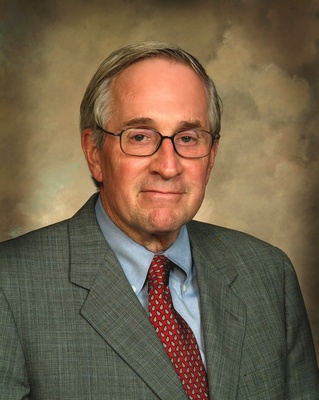
 committee, and the Rev. Dr. Rose Bogal-Allbritten, who will lead the transition committee. Campbell, a Louisville attorney, is the senior warden at St. Mark's Church in Louisville and a member of the Diocesan Committee on Canons. Bogal-Allbritten, the deacon of the Four Rivers Deanery, is also the director of the School of Ministry and the coordinator of Education for Ministry programs in the diocese. The appointments come at the end of a process of several months, during which Standing Committee members developed a list of about 20 persons that they thought would be able to lead such an endeavor, according to Watson. "We based this on what we knew of their work in the diocese in the past, their commitment, faithfulness, character, experience and ability to lead," he noted. "We then began to pray and discern who might be called to lead. We then narrowed it down to four persons for each committee. We prayed and discerned some more, and then each member of the Standing Committee ranked the four candidates. The two highest vote getters were then called and they both accepted the call."
Explaining the responsibilities of each committee, Watson said that the search committee has two major tasks. First, it must develop a profile of the diocese after it has surveyed the clergy and laity to identify "their hopes and dreams for the diocese," said Watson. The profile, which will be sent to dioceses and posted online, is very important because it will establish the qualities of leadership that the diocese is seeking, he noted. The committee also will be responsible for soliciting nominations; interviewing and visiting nominees; and discerning a slate of nominees that will be considered at a special diocesan convention for electing a new bishop.
The transition committee has three main responsibilities: it assists in Bishop Gulick's transition to his retirement; it organizes the "walk about," a weekend long series of meetings with the slate of candidates at several locations in the diocese; and it manages the special electing convention, and the transition and reception of the new bishop, including the installation and consecration service.
At press time, the Standing Committee was in the process of discerning the committees' membership, which it expected to have been completed by the beginning of this month.
"We have had a really tremendous response of people who want to serve on the committees," said Watson. "Approximately five dozen, 60 or so people applied, and we can't have that many on the committees." In addition, not every church sent nominations. "Our work is to be sure there is balance, and if there isn't balance it is our task to find that balance and solicit it," Watson said. "We're in the process of prayerfully discerning it and calling and asking people."
Both committees will meet for the first time at the retreat at All Saints' Episcopal Conference Center, where they will meet with the Standing Committee, hear from Bishop Gulick (who will preside over Holy Eucharist with them), and work with the national consultant. The consultant, Watson said, will explain the whole process and help the committees establish the structures and timelines necessary for them to complete their responsibilities. "Basically," Watson said, "the retreat will set into process the work of the committees."
Standing Committee names chairs of bishop search, transition committees
Mary Jane Cherry, Communications Director
January 21, 2009
The Standing Committee, charged with instituting the process for selecting the eighth bishop of the Diocese of Kentucky, has retained a national consultant and selected the chairs of the Bishop Search and Transition committees. The Standing Committee expects to have both committees in place in time for a joint planning retreat set for Feb. 7-8.